Budget Planning

Spend the right money, not the most money.

The mistake is walking into budget season with a price list. QDS CEO Sean Farrell and Account Executive John Priore walk through how to take a holistic look at your branches, your equipment, and your contracts before your 2027 numbers get locked in.

Jump to a Topic

Part of our forte here at QDS is to have people spend the right money, not the most money, and be a proactive partner people can trust.

Sean Farrell, CEO 

The four cylinder car to get us from A to B has worked for a while. Maybe we need to move up to a V8.

Sean Farrell, CEO 

...the default for most people is to stay status quo or to assume the devil you know is better.

Sean Farrell, CEO 

Start here

Take the "doctor's" approach to budget season

It's not as simple as "Do we need a new cash counter, and what will it cost in 2027?" The best budget conversations start with a checkup. How is your ATM channel operating? Where is each piece of equipment in its lifecycle? Which branches keep coming up as the squeaky wheels? Where are you in your contract cycle?

Answer those first, and you'll know which machines belong in 2027 and which can wait.

What should you evaluate?

 Where to look for 2027

Eight places to look before you lock the budget

 01

Know what you have

After a merger, or after years of growth, many institutions can't say exactly what equipment sits in every branch. A branch survey that pulls serial numbers, parts availability, and maintenance history gives you the real picture. You can't just ask ChatGPT which of your machines are end of life.

 02

End-of-life equipment

Machines that work fine today can become un-upgradable next year. Plan replacements on a cycle instead of waiting until the wheels fall off. With 20 locations, that might mean replacing five machines a year, not one surprise capital hit. Label each one a 2027 project or a 2028 project, and next year's budget gets easier too.

03

The new $10 bill

The redesigned $10 is on its way. Most current machines update quickly (for many money counters it's a USB software update), but some end-of-life models, such as the Glory RBG-100 and Vertera 6G recyclers, won't get it. Those machines won't stop working; they'll reject the new note, and your staff will hand count it.

Ask your vendor one simple question: "Is this machine covered?" If you're under a QDS service contract, we handle the upgrade on every model that can take it.

 04

ATM and ITM strategy

This year's Windows upgrades stopped the compliance clock for a while. Use that time to decide your strategy. Do high-volume locations with six- to eight-year-old machines need attention before 2029? Is it time for core integration, deposit taking, or an as-a-service model? Has a competitor raised its game in your market?

 05

Is your TCR helping your staff?

Look past whether your recyclers are running. How often do tellers stop to deal with inventory? Newer cassette-based machines hold more and cut back-office time. If your lending team has brought in new business and cash volume has grown, the four-cylinder that got you from A to B may need to become a V8.

 06

Desktop cash equipment

Are your counters, discriminators, and validators still meeting your staff's needs? Should the same model run across your whole footprint? Cash discriminators and TCRs work well in tandem, and QDS sells and supports both, which many vendors don't.

 07

The costs people forget

The machine is only part of the project. Budget for:

  • Branding and signage: a refreshed surround, an LED surround for a site with strong road frontage, or new housing for a 15- to 25-year-old kiosk building.

  • Software and configuration: NFC tap, recycling support from your processor, and the professional services to tune it across your fleet.

  • Security: gates, application whitelisting, drive encryption, and skimming and shimming protection.

  • Installation and integration costs that may sit in another department's budget.

 08

Service, maintenance, and training

Maintenance costs tend to rise as equipment ages, with every vendor, QDS included. Compare the cost of maintaining a 10- or 12-year-old machine against replacing it.

And budget for people: when a head teller or several tellers turn over, a $1,000 to $2,000 trainer day keeps a TCR from sitting unused because the new team doesn't feel comfortable on it.

 Found money

Short on budget? Look across the hall.

Branch operations isn't the only budget that can solve a branch problem. If you've posted a teller position for months or have someone going out on leave, is there HR budget to consider? Don't overlook your lower-volume, remote locations, where the branch manager often doubles as a second control.

Build the business case backward: find money that's already earmarked in IT or HR, then show how deploying it on equipment solves the same problem and pays a return.

Prioritizing interactions over transactions that’s a game plan for success!

ITMs

Interactive teller machines (ITMs) build on the functionality of ATMs while adding additional transaction capability and the opportunity for real-time video interaction with on-site or remote staff.
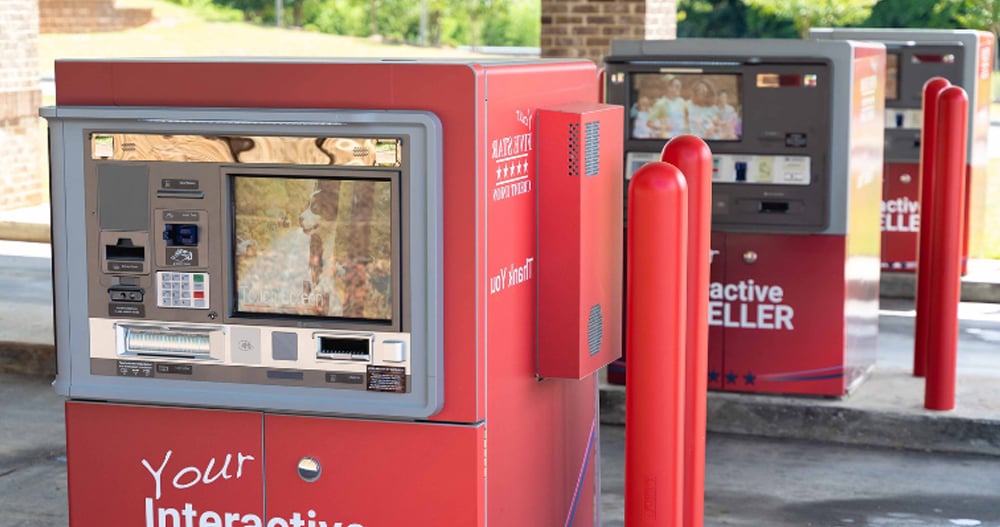
ITM-or ATM - ITM

With core integration, ITMs become excellent ways to extend service hours and enhance self-service offerings for your clients.

Key Benefits:

  • Operate with greater efficiency: An estimated 80-90% of transactions done by a teller at a branch can be handled by ITMs. With core integration, 1 video teller can support 15-25 terminals.
  • Increase client convenience & satisfaction: Core integrated ITMs can extend full-service capabilities of your branch up to 23 hours a day. Studies have shown that 84% of ITMs users are very satisfied with their experience. Even 72% of people 55+ are comfortable using ITMs.
  • Reduce transaction costs: It's estimated that most in-branch teller transactions cost FI's an average of $4.50 per transaction. The same transaction on a self-service device costs between $.50 and $.70.
  • Expand in your market: ITM technology enables FI's to detach their self-service channel from the physical branch, enabling them to efficiently scale their market presence—and provide greater choice and convenience for their clients.

Cost:

The cost of an ITM depends on several features and functions, as well as the configuration related to your institution’s core. Typically, different ITM models vary in cost:

  • Lobby ITMs range from $30,000 - $60,000
  • Drive-through ITMs range from $60,000 - $78,000, depending on recycling or standard functionality

Other cost factors include integration type and software. Features such as core integration, ATM switch integration and ActiveTeller may range from $100,000 - $150,000.

Realistically, you can expect an all-in cost between $20,000 – 25,000 annually for hardware, software and maintenance.

Bottom Line:

The market has changed immensely since the introduction of ITMs 10 years ago. Several manufacturers are sunsetting their legacy ITM and ATM series, leaving many financial institutions looking to invest ITM fleet replacement or implement this technology for the first time. ITMs can serve as a cornerstone of your branch transformation and growth initiatives.

If you’re considering ITMs as part of your strategy, it’s important to understand all of the solutions in play, what their strengths are, and how to leverage this investment to best achieve your goals.

ARE ITMS RIGHT FOR YOU?

TELLER CASH RECYCLERS               

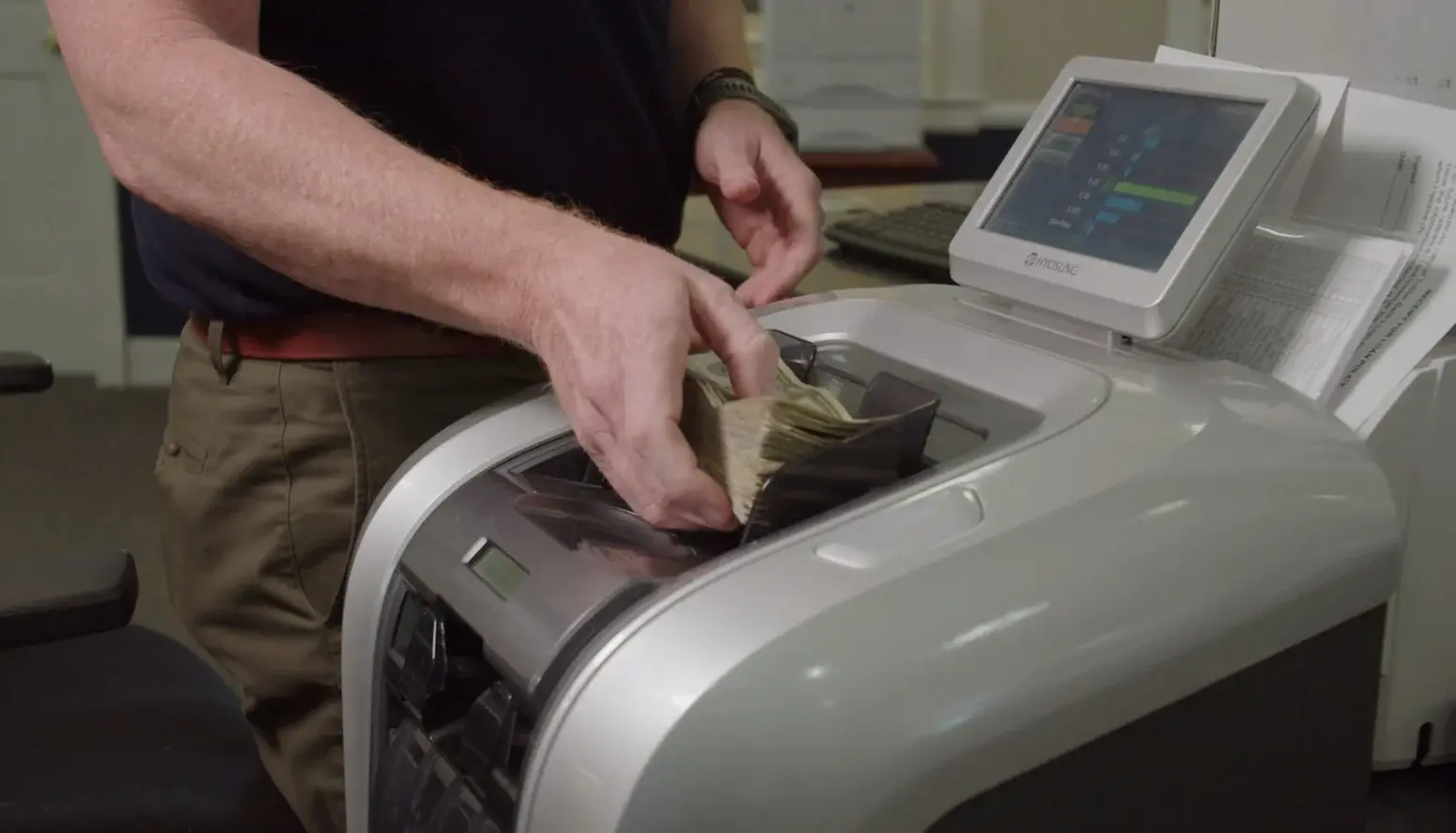
A teller cash recycler (TCR) authenticates incoming bank notes and stores them securely in an internal vault. Tellers can then process automated cash transactions from the recycler’s inventory.
TCR-Monay-Side-QDS

TCRs are a powerful tool in today's market, proven to increase branch efficiency and security by lessening the burden of cash handling for your staff. 

Key Benefits:

  • Process transactions faster and more accurately
  • Increase security by dramatically reducing vault transactions (from 10-30 on a busy day, down to 1-2 visits)
  • Increase staff efficiency – typically, two staff members working from a single TCR can do the work of three
  • Improve client relations by limiting staff trips to the vault
  • Provide a “mini-vault” for an extended/disconnected drive-through setup, thereby eliminating the need for staff to carry cash across parking lots

Cost:

A TCR can range in price depending on the type of machine, maintenance costs, depreciation of the technology, etc.

The typical capital cost is:

  • $30,000 - $42,000 (for purchase and installation)
  • All-in cost of $9,000 - $12,000/year (including depreciation and maintenance)

Bottom Line:

For branches that could benefit from automation—those typically starting around 70 to 80 transactions per day per teller—is really where a TCR has the potential for immediate impact. One teller could feasibly scale up to as high as 400 transactions per day with the right automation solution.

LEARN MORE ABOUT TCRS

DESKTOP

Cash discriminators are desktop-sized machines that count, authenticate, and orient mixed currency. Automated cash handling is a helpful tool for eliminating errors and denominating deposits.

Key Benefits:

  • Keep denominations counted, organized and strapped effectively
  • Easily verify teller accuracy
  • Quickly spot counterfeit notes with a processing rate of 1300 notes per minute; reject faulty notes from your clients at the time of deposit
  • Process commercial deposits and night drop bags more efficiently; strap and get money into the vault faster
  • Supplement cash recyclers by helping with heavy single-note denominations or other scenarios—such as unfit bills—that aren’t a good fit for the recycler

Cost: $2,500 - $3,000

Bottom Line:

For an estimated all-in cost of less than $100/month (including maintenance), your financial institution could save 2-3 hours per day across teller line operations by implementing a cash discriminator.

LEARN MORE ABOUT CASH DISCRIMINATORS

SERVICE

The use of managed services as a platform is on the rise. This could include things like software patching, graphics distribution, fleet-wide updates, and any enhancements to your software stack that can now be done remotely as opposed to on-site.

ATM Processing (2)

Key Benefits of QDS Service and Our Managed Service Platform:

  • Uptime guarantee - We have found that the most important thing for our customers is uptime. That is why we offer a unique uptime guarantee for your ATMs and ITMs. Our team is focused 12 hours a day, seven days a week on keeping your fleet running. Should one of your units go down, the typical repair time can be under 15 minutes.
  • Employed service team members: We employee our team members instead of outsourcing our service program to national organizations. This allows total quality control of our service delivery.
  • Visibility and communication: We are big on communication, ensuring you have visibility into what's happening with your fleet at all times
  • Prioritize preventive maintenance: Every machine in our network typically gets at least two preventive maintenance calls per year. For things like cash recyclers and other devices, we may service them up to four times per to ensure they operate at optimal efficiency.
  • Security: We are of the utmost secure and our practices and procedures but at the end of the day, you have someone who cares about solving your problem whether it is our problem to solve or not. So QD s believes in hand holding working with your vendors which may be your ATM network, your core, your security vendors.

Bottom Line:

QDS has remained successful in this business by doing what we say we are going to do. We aim to tie our success to yours and deliver the exceptional service necessary to keep your institution up and running.

IS MANAGED SERVICES RIGHT FOR YOU?

Budgeting FAQs

The budget planning questions we hear most at QDS


Let's Design Your Game Plan

The QDS team is ready to guide you through the budget planning season. Connect with us today!